How to Become an Indispensable Employee in an AI-Driven Workplace
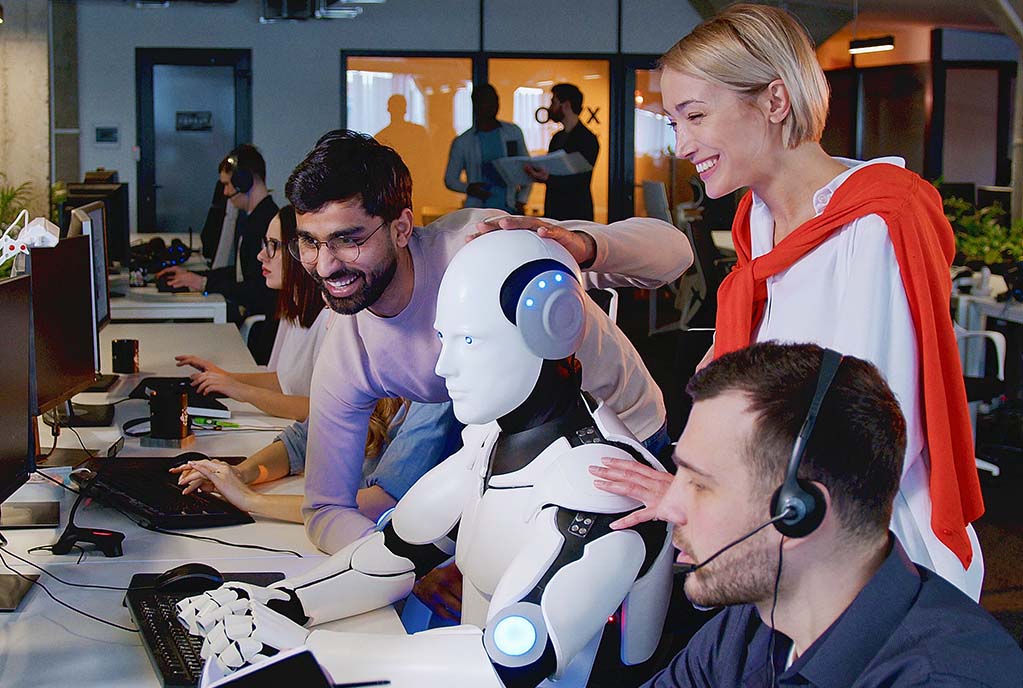
The question is simply this: What do you bring to this organization that a well-designed AI system cannot?
If you have not thought carefully about your answer, that is worth pausing on. Not because the question is meant to be alarming — it is not — but because the people who have thought it through carefully are already positioning themselves differently than everyone else. They are not scrambling. They are not waiting for the threat to arrive. They are already becoming the kind of professionals who make that question, in their specific case, remarkably easy to answer.
This article is about what that actually looks like in practice. Not in theory. Not in the language of LinkedIn motivational content. In the concrete, unglamorous, deeply rewarding reality of what it means to build a career that remains genuinely valuable in a world where AI is doing more and more of what most people were hired to do.
The Ground Has Already Shifted — Most People Have Not Noticed
Before getting to the qualities that matter, it is worth being clear about the context. Because a lot of people are still operating with a picture of the AI workplace that is two or three years out of date.
The numbers have moved faster than most people's mental models. Organizations using AI in at least one core business function have jumped from 78 percent to 88 percent in a single year, and the tools have gone from experiments to embedded workflow infrastructure at a pace that most HR departments are still catching up with. Meanwhile, demand for professionals who can work effectively with AI systems has grown sevenfold in just two years — which means the market is already separating people who have adapted from people who have not.
Here is what that means practically: the employees who are most at risk right now are not the ones whose jobs look robotic. They are the ones who are performing hybrid human-machine roles — doing cognitive, coordination, and communication work — but doing it in a way that is entirely substitutable. Filling a role, in other words, rather than occupying a position.
The ones who are least at risk are not necessarily the most technically sophisticated. They are the ones who have developed something harder to replicate than technical skill: a specific combination of judgment, trust, relationship capital, and institutional understanding that makes them the person their organization genuinely cannot afford to lose.
That combination is not accidental. It is built. And it is built from a specific set of qualities that the most durable professionals are cultivating — consciously or not — right now.
Quality 1: AI Fluency Without AI Dependence
The first quality is one that surprises people when they think about it carefully, because it seems like a contradiction.
The most indispensable employees in AI-driven organizations are not the ones who use AI the most. They are the ones who use it the best — which is a meaningfully different thing.
Research tracking how 2,500 employees used AI tools over an eight-month period found that top AI users treated the technology as a reasoning partner rather than a productivity shortcut. They brought ambitious, complex, well-framed problems to AI. They interrogated its outputs rather than accepting them. They delegated specific cognitive subtasks — research, synthesis, drafting — while retaining the judgment functions for themselves. In short, they were directing a tool, not following one.
The employees who are quietly becoming replaceable are doing the opposite. They are letting AI generate outputs and attaching their name to the result. Over time, this erodes the one thing they actually need to protect: their capacity to think, judge, and decide independently. The organization notices this more than they realize, even when it cannot immediately articulate what has changed.
Developing genuine AI fluency means understanding what specific AI tools can and cannot do, how to prompt them for better outcomes, how to verify their outputs critically, and — crucially — how to explain your own reasoning and conclusions in a way that does not require the AI to be in the room. It means using AI to extend your reach without letting it shrink your capability.
This distinction matters more than it looks on the surface. The ability to frame problems well, oversee AI outputs, and know when to escalate decisions is precisely what McKinsey's workforce research identifies as the emerging critical layer of human-AI collaboration. These are not technical skills in the traditional sense. They are thinking skills — and thinking skills atrophy when you stop exercising them.
Quality 2: Judgment That Does Not Need to Be Supervised
The second quality is rarer than it sounds, and more consequential than most people appreciate.
Every organization has employees who can execute tasks competently. Far fewer have people who can exercise genuine judgment — who can walk into an ambiguous situation with incomplete information, conflicting priorities, and real consequences, and make a call that turns out to be right more often than not. That capacity, in an AI-driven workplace, becomes the clearest possible line between a person who is valuable and a person who is necessary.
AI systems are extraordinarily good at optimization within defined parameters. They struggle profoundly with situations where the parameters themselves are unclear, contested, or ethically loaded. When the situation is novel, when the stakes are genuinely high, when the data is incomplete or misleading — that is exactly when AI-generated outputs become least trustworthy and human judgment becomes most essential.
Building this quality requires something that most professional development frameworks undervalue: exposure to consequential decisions combined with honest reflection on outcomes. Not reading about decision-making. Actually making decisions, being accountable for them, and studying what your reasoning got right and wrong in retrospect. This is the kind of development that compounds, that builds the intellectual depth and self-knowledge that no algorithm can generate on your behalf.
It also requires developing what might be called productive epistemic humility — the ability to hold uncertainty without paralysis, to act on incomplete information without pretending the information is complete, and to revise your conclusions when evidence demands it without losing people's confidence in your reliability. This is harder than it sounds, and it is rarer than organizations like to admit.
Quality 3: Emotional Intelligence at Depth
There is a temptation to treat emotional intelligence as a soft qualifier — the kind of thing that sounds good in a job description but does not really determine outcomes. That view is no longer defensible.
In an AI-driven workplace, the ability to understand, navigate, and influence the emotional reality of the people around you is one of the most practically significant capabilities a person can have. Because AI cannot do this. Not really.
Research from organizational psychologists makes clear that AI cannot replicate the benefits of genuine human connection, and that organizations relying on AI for the social and emotional functions that humans used to perform are creating real risks — eroding collaboration, trust, and the social fabric that makes teams functional. The people who can fill that gap, who can create psychological safety, build genuine rapport, manage interpersonal tension, and inspire people who are anxious or uncertain — those people are becoming more valuable as AI handles more of the cognitive baseline.
This is not a passive quality. Emotional intelligence is not something you either have or do not have. It is a developable skill, and developing it requires the same intentional investment that technical skills require — with the added complexity that it demands self-awareness, honest feedback, and a willingness to sit with discomfort in a way that purely cognitive development does not.
The specific dimensions that matter most in an AI-augmented workplace are: reading what people actually need (not what they say they need), managing relationships through difficulty and disagreement without damaging the underlying trust, knowing when to push and when to hold back, and the ability to hold space for others' anxiety and resistance without being destabilized by it yourself. These are not minor interpersonal niceties. They are the load-bearing elements of organizational functioning, and they remain entirely human responsibilities.
Quality 4: The Ability to Solve Problems That Have Not Been Solved Before
Organizations face two kinds of problems: familiar ones with established patterns of resolution, and novel ones where the map does not yet exist.
AI is remarkably good at the first kind. It has access to more solved problems than any human ever will, and it can pattern-match to relevant solutions faster than any team. For problems that are essentially variations on things that have been successfully handled before, AI often produces better first responses than experienced professionals.
Novel problems are different. When the situation is genuinely new — when the competitive landscape has shifted in an unexpected way, when the team is failing in a mode that does not fit any existing playbook, when the organization needs to do something it has never done before — the pattern-matching advantage AI enjoys suddenly becomes a liability. The closest existing patterns may be actively misleading.
This is where the kind of intellectual agility and first-principles thinking that genuine problem-solvers bring becomes irreplaceable. Not the ability to recall relevant cases, but the ability to set cases aside and reason directly about the actual situation in front of you.
Developing this quality is not about being contrarian or creative for its own sake. It is about maintaining the mental habit of asking "what is actually true here?" rather than "what does this remind me of?" And it is sustained by a commitment to continuous intellectual growth that keeps your thinking elastic rather than settled. The people who stop genuinely learning — even unconsciously, by relying on AI to do their intellectual work for them — lose this elasticity over time. The people who protect and develop it become progressively more valuable in exactly the situations where value is highest.
Quality 5: Trustworthiness That Is Demonstrated, Not Claimed
This quality is perhaps the most fundamental and the least talked about.
Trust in organizational contexts is not an attitude. It is a track record. It is built through repeated instances of doing what you said you would do, handling information with discretion, being honest about what you know and do not know, and remaining accountable for outcomes even when things go wrong. None of this is available to AI systems. An AI can produce reliable outputs, but it cannot be trusted in the sense that a colleague can be trusted — because it has no stake in the outcome, no reputation at risk, no relationship to protect.
In an AI-driven organization, humans increasingly serve as the accountability layer. They are the ones responsible for the quality of decisions made with AI input, for catching errors in AI-generated outputs, for answering for outcomes to people who matter. The people who step into this role with genuine seriousness — who treat responsibility not as a burden to be minimized but as a source of professional identity — become the anchors that organizations actually depend on.
Trustworthiness also manifests in a dimension that is increasingly tested in AI-augmented environments: the willingness to speak difficult truths. When AI models produce outputs that sound authoritative and plausible but are wrong or misleading, the person who catches this, names it, and redirects the organization is doing something that requires courage as much as competence. Navigating organizational dynamics without sacrificing your integrity is never more important than when the authority of AI outputs makes institutional groupthink more seductive than usual.
Quality 6: Creative Synthesis Across Domains
AI is a powerful generator of content within domains. It can produce highly sophisticated output in any field for which it has been substantially trained. What it cannot do is genuinely synthesize across domains in the way that produces genuinely novel insight.
The kind of cross-domain thinking that solves a business problem by applying a biological principle, or identifies a market opportunity by connecting a sociological trend with a technological constraint, requires the kind of mind that has been genuinely formed across multiple areas of understanding. Not just exposed to multiple domains, but shaped by them — with the kind of embodied, contextual, judgment-laden knowledge that comes from sustained engagement, not from having read a summary.
This is one of the highest-value capabilities you can build right now, and one of the most underrated. The world is full of specialists who are very good within their domain and find themselves increasingly in competition with AI for their domain's core outputs. It is significantly less full of people who can move fluidly across domains, make connections that domain specialists miss, and generate the kind of insight that organizations pay premium rates for precisely because it cannot be commoditized.
Research on what actually drives creativity in AI-augmented environments shows that AI enhances creative output most for people with strong metacognition — the ability to plan, monitor, and refine their own thinking. This means the benefit of AI tools flows disproportionately to people who already know how to think well. The implication is counterintuitive but clear: investing in your own cognitive development is not in competition with AI fluency. It is what makes AI fluency genuinely productive.
Quality 7: Adaptability as a Practice, Not a Personality Trait
Organizations in an AI transition are changing fast. The workflow you mastered eighteen months ago may already be substantially different. The role you were hired for may be evolving in real time. The team structure that made sense when headcount looked one way may need to look entirely different as AI handles tasks that used to require people.
The employees who thrive in this environment are not simply the ones who are fine with change in the abstract. They are the ones who have developed adaptability as an active, practiced capability — who have trained themselves to learn new things quickly, to release the identity investment in how things used to be done, and to find the professional opportunity in disruption rather than only the loss.
This is harder than it sounds, because adaptability at this level is not really about personality. It is about having enough grounded sense of your own purpose and value — independent of any specific role, title, or methodology — that you do not experience organizational change as existential threat. The people who have done the work of connecting their career to a genuine sense of purpose adapt more readily, not because they care less, but because they know what they are actually here to do — and that clarity is not threatened by changes in the tools or structures around them.
Adaptability also means maintaining the intellectual and emotional bandwidth to manage the demands of a fast-changing workplace without sacrificing the other dimensions of your life that make you capable of sustained high performance. The employee who burns out in year two of an AI transition does not adapt — they collapse. Building a sustainable rhythm of work and recovery is not a personal preference. It is a professional asset.
Quality 8: The Capacity to Lead Without Being Asked
Every organization has people who do their jobs well. It has fewer people who take ownership — who see a problem and act on it before being directed to, who invest in other people's development because it matters to the team's success, who carry responsibility for outcomes beyond their formal remit because they care about the work itself.
In an AI-driven workplace, this quality becomes a sharper differentiator than ever. Because AI can make people highly efficient at executing defined tasks. It cannot make them want to take initiative. It cannot make them give a damn about the outcome. And the organizations that will actually succeed in extracting value from AI — rather than just using it to reduce headcosts — need people who understand the difference between productivity and leadership, and who choose to lead.
Leadership in this sense does not require a title. It requires the willingness to turn disagreements into productive outcomes rather than entrenching conflict, to invest in relationships across the organization, to model the kind of accountability you want others to practice. It requires taking responsibility for the quality of AI-assisted work rather than treating AI outputs as a way to distribute accountability without distributing effort.
The employees who do this consistently become the institutional memory, the cultural anchors, and the informal leaders that organizations depend on for their actual functioning — regardless of what the org chart says. These are not the people who get displaced in AI transitions. They are the people organizations restructure around.
Quality 9: Self-Knowledge and Proactive Growth
There is a meta-quality that underlies all of the others, and it is one that most professional development frameworks miss entirely.
The most indispensable employees in AI-driven organizations are not just the ones who have built the right capabilities. They are the ones who know themselves well enough to know which capabilities they need to build, which areas of their performance are genuinely strong, and which ones are quietly deteriorating because they have been outsourcing that work to AI tools.
This requires a level of honest self-assessment that is genuinely uncomfortable. Most people's picture of their own professional strengths is partially a projection of what they wish were true. The AI age makes this more dangerous than it used to be, because AI can paper over your weak areas for longer before they become visible to others. But they do become visible — in the moments that matter most.
Understanding where your life is actually balanced and where it is quietly depleted is not separate from your professional effectiveness. It is the foundation of it. The person who is running on empty — whose personal relationships, physical wellbeing, and sense of meaning are depleted while they focus entirely on professional output — is not building a sustainable career. They are consuming it.
The 10-segment view of life success is useful here precisely because it resists the professional tunnel vision that makes people vulnerable. Your intellectual development, your emotional health, your relational quality, your physical capacity — these are not separate from your professional value. They are its substrate. The employee who is genuinely thriving across these dimensions brings a quality of presence, judgment, and energy to their work that the one living unidimensionally cannot replicate. And in an AI-driven workplace, that human wholeness becomes, paradoxically, one of the most significant professional differentiators available.
The Practical Question: Where to Start
If you have read this far, you may have recognized yourself in some of these qualities — and noticed your absence in others. That is not a reason for discouragement. It is the most useful information available to you.
The temptation at this point is to want a comprehensive plan, a structured program, a roadmap that covers all of these dimensions simultaneously. That temptation is understandable, but it leads to the kind of diffuse effort that changes nothing.
What actually works is beginning with an honest answer to a specific question: of the qualities described here, which one is the clearest constraint on your professional value right now? Not the most interesting one, and not the one that would be easiest to work on. The one that, if developed meaningfully, would change what you are able to contribute in a way that actually matters.
That question is harder to answer accurately than it sounds, because it requires you to look at yourself without the flattering filters that most people apply by default. If you are not sure where your real growth gaps are — a structured self-assessment across the full range of life and professional dimensions is a more reliable starting point than trusting your own impressions, which are shaped by the same blind spots you are trying to see.
What is clear is that the window for building these qualities is not indefinitely open. Early-career workers who have delayed developing their non-automatable capabilities are already experiencing the effects in the labor market. The organizations and individuals who are building these qualities now — not waiting to see how AI develops, but treating the current moment as the time to invest in irreplaceable human capability — will be in a fundamentally different position in three years than those who are waiting for clarity that may never come.
The AI transition will not produce a clean announcement of when it is time to start taking these qualities seriously. That time is now. And the people who recognize it earliest are, by definition, already becoming indispensable.
Conclusion: The Humans Who Cannot Be Replaced
The conversation about AI and employment has been dominated by a single, anxiety-producing framing: replacement. Which jobs will AI take? How long do we have? Who is safe?
It is the wrong frame. The right frame is not replacement — it is redefinition.
What AI is actually doing, in organization after organization, is shifting the definition of what human employees are for. The tasks that can be automated are being automated. The tasks that cannot — judgment, trust, relationship, creative synthesis, accountability, leadership — are becoming more central to what valuable human work means.
This is not an argument that everything is fine and no one needs to change. Plenty of people are not developing the qualities that this shift rewards, and they will feel the consequences. But it is an argument that the qualities examined in this article are not abstract virtues. They are concrete professional assets, more durable than any specific technical skill, and available to anyone willing to invest in them seriously.
The question is not whether AI will change your workplace. It already has. The question is whether you are building the kind of human value that becomes more important — not less — as AI handles more and more of everything else.
That is the work. It does not come with a shortcut. But it is the most important professional investment available to you in the decade ahead.


Comments
Post a Comment